Read this when
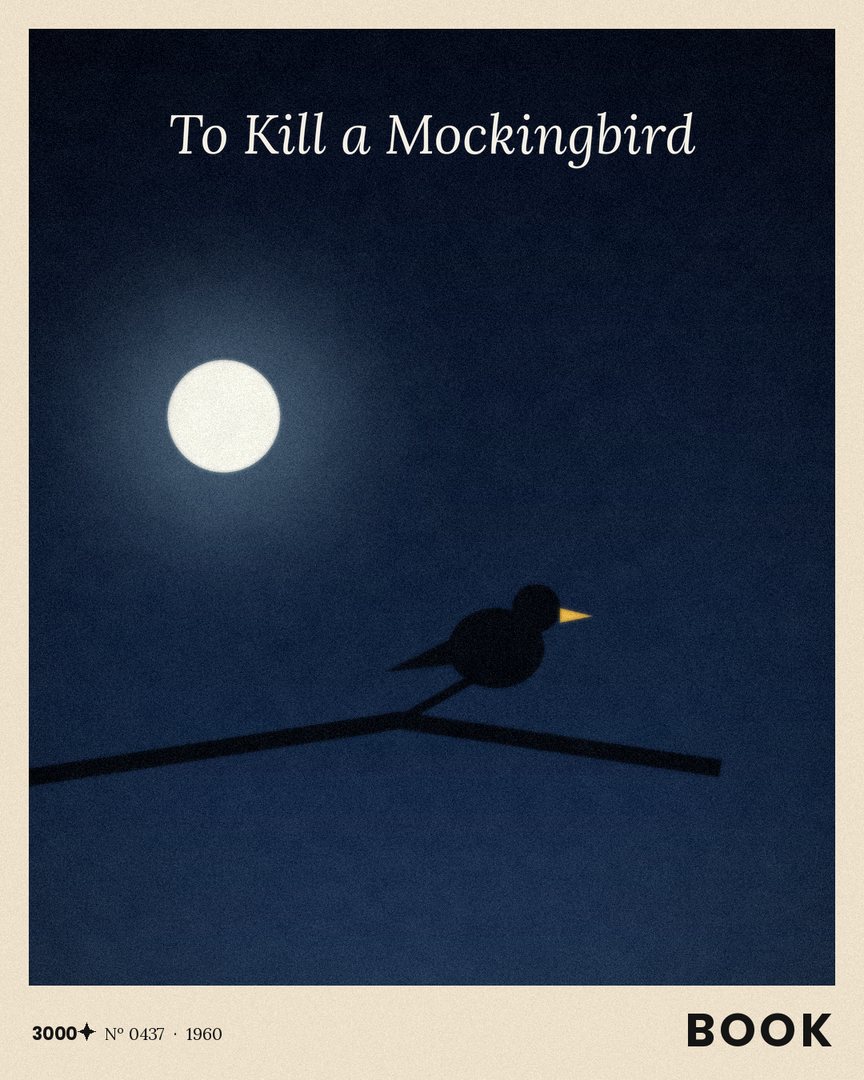
To Kill a Mockingbird
When doing the right thing means losing anyway. Atticus Finch still has notes for anyone standing alone on principle. ⚖️
Who it's for
The story is filtered through Scout's child's-eye view, so readers relive the moment of first discovering that adults, and the justice system, can be unfair, which can help them name their own disillusionment rather than simply feel it.
Feelings it meets
What it is
Harper Lee's 1960 novel is narrated by Scout Finch, who recalls her childhood in the fictional town of Maycomb, Alabama, in the mid-1930s. Her father Atticus, a lawyer, defends Tom Robinson, a Black man falsely accused of raping a young white woman, Mayella Ewell. Alongside the trial, Scout and her brother Jem are fascinated by their reclusive neighbor Boo Radley.
Where to find it
In print everywhere and widely held by libraries (Libby/Hoopla); audiobook available (Sissy Spacek narration); graphic-novel adaptation by Fred Fordham. Not public domain.
Before you start
Heads up: Implied sexual abuse and racist violence.
Age: Ages 14+
One ever feels his twoness,—an American, a Negro; two souls, two thoughts, two unreconciled strivings;W. E. B. Du Bois, The Souls of Black Folk, Chapter 1