Read this when
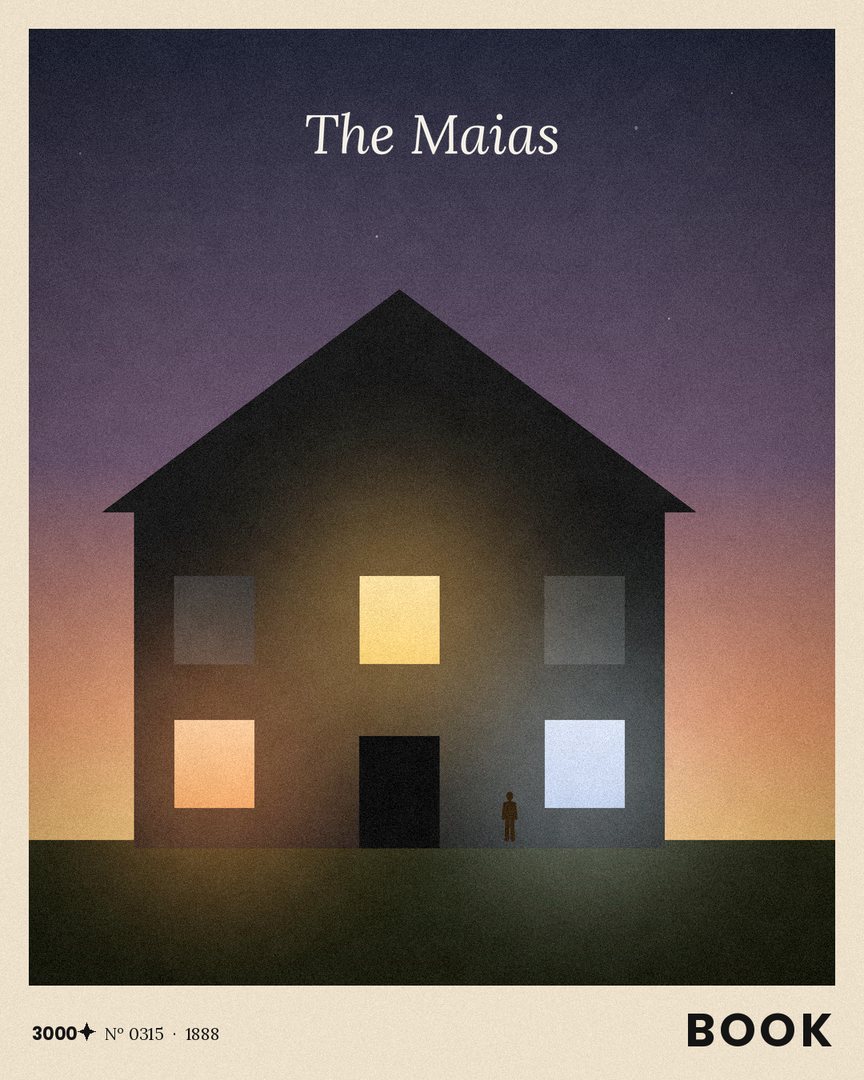
The Maias
'Nothing is worth running for,' they said. Then they ran for the tram. Every friend group, since 1888. 🚋
Who it's for
The novel lays out three generations: Afonso's steadiness, Pedro's collapse when his wife leaves, and Carlos growing up under a devoted grandfather with every advantage and a buried history.
Feelings it meets
What it is
Eça de Queirós's 1888 realist novel follows three generations of the Maia family in Lisbon, mostly in the 1870s, around the family house known as Ramalhete. After his wife Maria Monforte leaves him for an Italian lover, Pedro da Maia takes his own life, and his father Afonso raises Pedro's son Carlos, who grows up to be a refined gentleman and a doctor.
Where to find it
Portuguese original is public domain and free online. The Margaret Jull Costa translation (New Directions, 2007; Dedalus in the UK) is in copyright and in print and in libraries. Older English transla.
Before you start
Heads up: A father's suicide and sibling incest.
Age: Ages 16+
Happy families are all alike; every unhappy family is unhappy in its own way.Leo Tolstoy, Anna Karenina, Part 1, Chapter 1 (tr. Constance Garnett)