Read this when
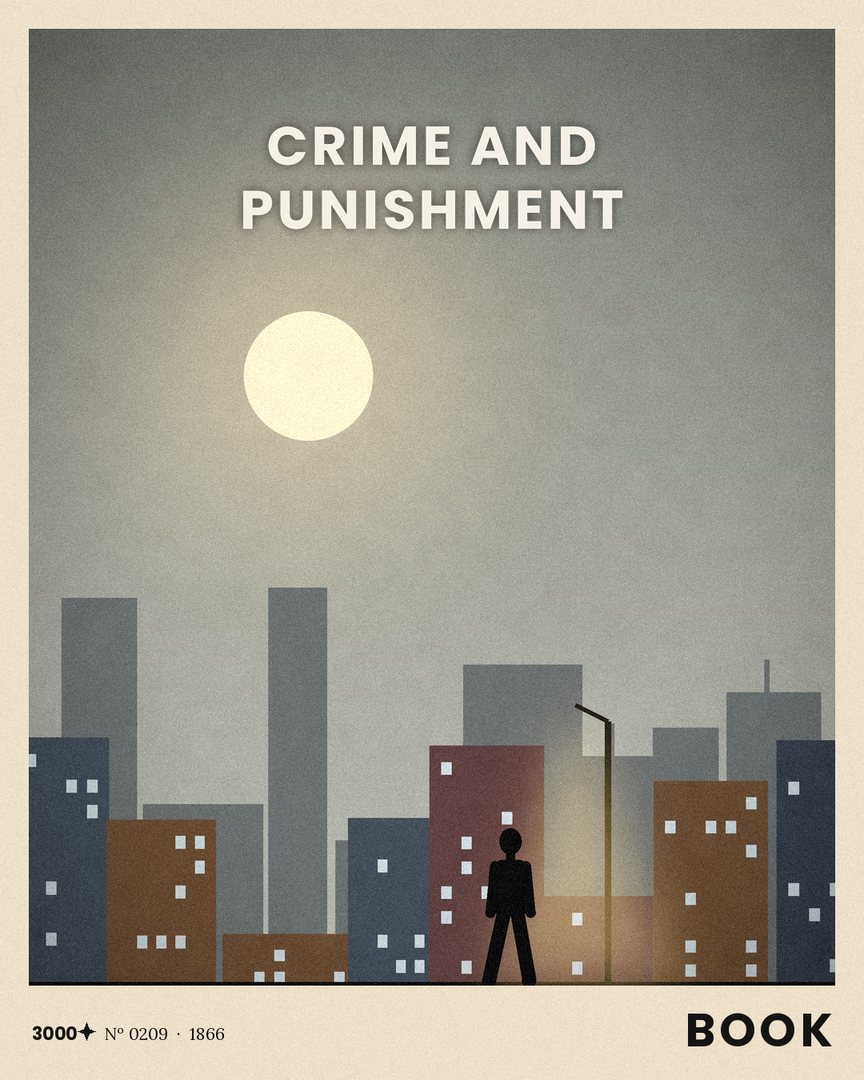
Crime and Punishment
Raskolnikov had a whole theory about why the rules didn't apply to him. His conscience didn't read the theory. 🪓
Who it's for
The novel stays inside Raskolnikov's mind before and after the killings, so the reader feels how a person argues himself into harm and how guilt arrives in the body before he admits it (fever, collapse, pushing away his mother, sister and friend).
Feelings it meets
What it is
Fyodor Dostoevsky's novel, first serialized in The Russian Messenger in 1866, follows Raskolnikov, an impoverished former law student in Saint Petersburg who kills an elderly pawnbroker and her sister Lizaveta, telling himself that extraordinary people may cross moral boundaries for a higher goal.
Where to find it
Public domain in the US in the Constance Garnett translation (1914); free on Project Gutenberg and Standard Ebooks. Modern translations are in print, in libraries (Libby/Hoopla) and as audiobooks.
Before you start
Heads up: Suicide and attempted sexual assault.
Age: Ages 16+
Yet you cannot lay remorse upon the innocent nor lift it from the heart of the guilty.Kahlil Gibran, The Prophet, “On Crime and Punishment”