Read this when
Layla and Majnun
Can't stop thinking about someone you can't have? There's a reason 'Majnun' means madman. Here's the original obsession story, 1188 edition. 🌙
Who it's for
Readers in the grip of consuming, one-sided or forbidden love will feel deeply seen: Qays's devotion is so total that he becomes 'Majnun', the madman, wandering the desert and composing verses to Layla.
Feelings it meets
What it is
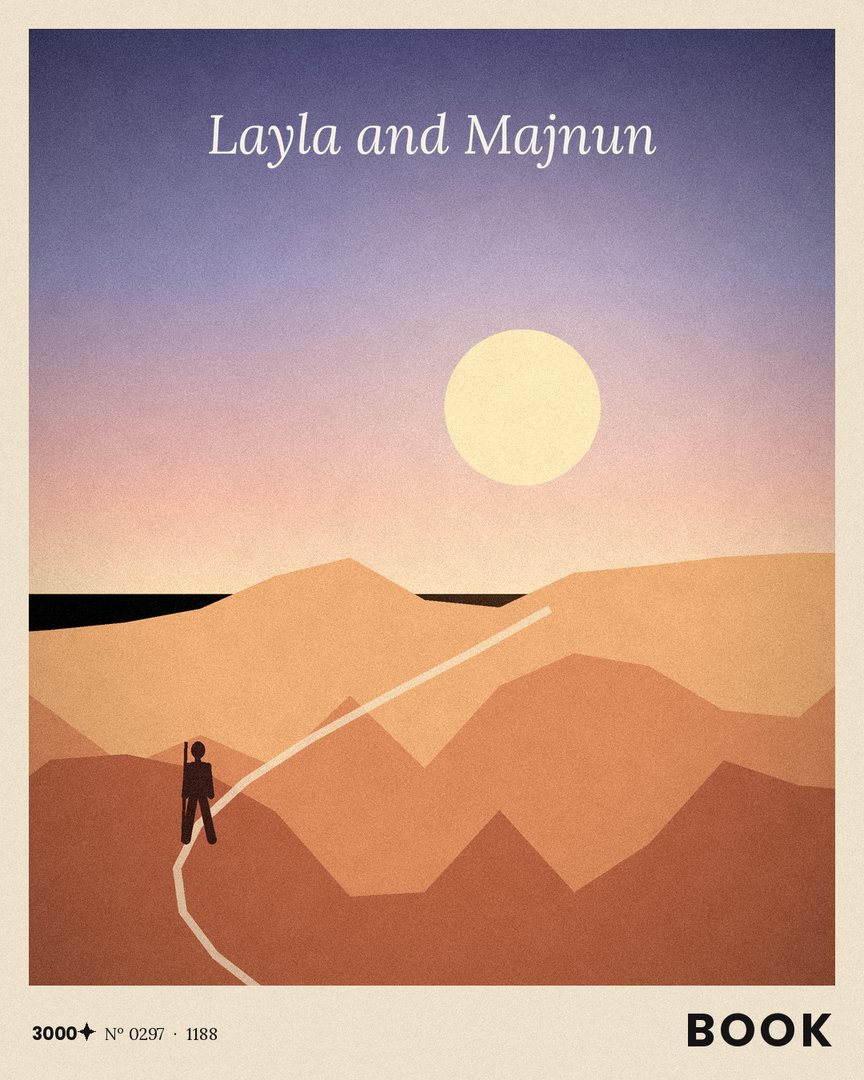
Nizami Ganjavi's 1188 narrative poem, the third part of his Khamsa, retells an older Arabic story about the poet Qays and his beloved Layla. The two meet at school and fall deeply in love, but family conflict keeps them apart and Layla is married to another man. Qays, called Majnun ('the madman'), leaves his people to wander the desert, cut off from ordinary life and absorbed in his longing for her.
Where to find it
Older 19th-century English versions (e.g., James Atkinson's 1836 verse translation) are public domain and can be found free online. Dick Davis's 'Layli and Majnun' (Mage, 2020; Penguin Classics, 2021).
Before you start
Heads up: Romanticized dying for love.
Age: Ages 14+
He's more myself than I am.Emily Brontë, Wuthering Heights, Chapter IX